My First Experience with Jamón Ibérico
At a small dinner gathering, I served jamón ibérico piled high with cheese and crackers, thinking more variety would impress guests. However, the delicate flavor got completely lost among stronger ingredients. It tasted ordinary rather than luxurious, which was disappointing for such a prized Spanish delicacy. Later, I discovered that simplicity is key, serve it on its own or with just a slice of bread. That small change revealed its rich, nutty depth and silky texture. If you’ve ever wondered why this dish is so expensive and loved, this jamón ibérico guide will help you truly understand and enjoy it.

Understanding Jamón Ibérico and Its Spanish Roots
Jamón ibérico is a type of cured ham from Spain made from Iberian pigs. It stands out for its rich marbling, long curing process, and unique, nutty flavor.
These pigs naturally store fat within their muscles, creating that melt-in-your-mouth texture. Moreover, traditional curing can take 2 to 4 years, developing deep, complex flavors.
Jamón Ibérico vs Other Popular Cured Hams
Jamón Ibérico comes from Spain and uses Iberian pigs, giving it a rich, nutty, and complex flavor after a long curing time of 24–48 months. In comparison, Prosciutto from Italy and Jamón Serrano from Spain use white pigs and have milder or saltier flavors with shorter curing periods.
This version stays authentic because it follows traditional methods like raising pigs freely, using natural feeding, and allowing long curing for a deeper taste.
Types of Jamón Ibérico You Should Know
Not all jamón ibérico is the same. The quality depends on the pig’s diet and breed purity.
- Jamón Ibérico de Bellota – Acorn-fed, highest quality
- Jamón Ibérico de Cebo de Campo – Mixed diet
- Jamón Ibérico de Cebo – Grain-fed
The finest version comes from pigs that roam freely and eat acorns (bellota), which gives the ham its signature flavor and healthy fat profile.
Ingredients You Need for the Perfect Experience
Main Ingredients
- Jamón ibérico (thinly sliced) – the star of the dish
- Olive oil (optional) – enhances richness
- Bread (rustic) – balances saltiness
- Tomato (optional, for pan con tomate)
Why Each Ingredient Matters
- The diet of the pig directly affects taste
- Acorn-fed pigs produce healthier fats similar to olive oil
- Thin-slicing ensures proper texture and flavor release
Yummingle Shopping List
- Jamón ibérico
- Rustic bread
- Fresh tomatoes
- Olive oil
How to Serve Jamón Ibérico Step by Step
Step 1: Bring It to Room Temperature
Take the ham out 30–45 minutes before serving. The fat should look glossy, not solid.
Step 2: Slice It Paper-Thin
Use a sharp knife and cut thin slices. Thick slices ruin the texture—I learned this the hard way.
Step 3: Plate It Properly
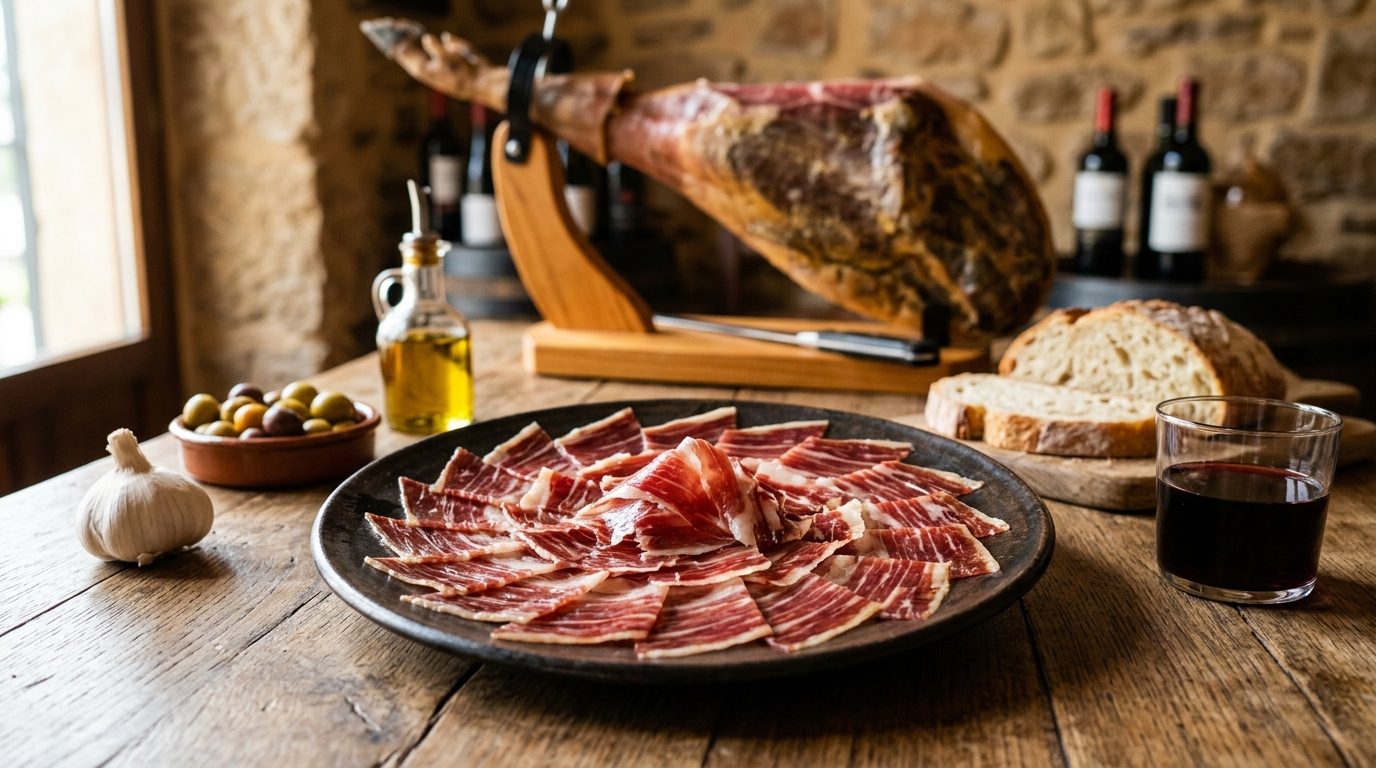
Arrange slices neatly without overlapping too much.
Step 4: Pair with Bread or Tomato
Serve with rustic bread or pan con tomate.
Step 5: Taste Slowly and Mindfully
Let it melt in your mouth instead of rushing.
Expert Tips to Avoid Common Mistakes
- Serving it cold → kills flavor
- Cutting thick slices → ruins texture
- Adding too many sides → distracts from taste
- Buying low-quality ham → affects experience
Science Tip:
The fat contains oleic acid, which melts at room temperature and releases aroma compounds, boosting flavor.
Best Ways to Serve Jamón Ibérico
| Occasion | How to Serve |
| Breakfast | With toast and tomato |
| Tapas | Small plates with olives |
| Lunch | Bocadillo sandwich |
| Party | Charcuterie board |
Perfect Drink Pairings
- Dry sherry
- Red wine
- Light beer
What Goes Well With It
- Cheese
- Olives
- Almonds
Nutrition Facts and Health Benefits
- Rich in healthy fats
- Good protein source
- Contains essential minerals
Estimated Calories: ~250 per 50g
Dietary Labels:
- Gluten-free
- Dairy-free
To lighten it up:
Serve with vegetables instead of bread.
| Common Questions About Jamón Ibérico Why is it so expensive? The high cost stems from the years of meticulous curing and the specialized acorn-heavy diet required for the pigs. Can I cook it? While it can be incorporated into warm dishes, it is traditionally best enjoyed raw to preserve its delicate texture. How do I store it? To maintain its quality, wrap the meat in wax paper and keep it in a cool, dry place away from direct sunlight. Is it healthy? It can be a healthy part of your diet when consumed in moderation due to its high content of oleic acid and proteins. Which type is best? Jamón Ibérico de Bellota is widely considered the highest quality due to the pigs’ free-range lifestyle and acorn diet. Why does it melt in the mouth? The unique fat composition, which has a low melting point, allows the ham to dissolve effortlessly on the palate. |
This jamón ibérico guide shows that simplicity and tradition create something truly special. Moreover, knowing how to serve it properly transforms the experience completely.
Try it yourself, take your time, and enjoy every bite. ¡Buen provecho!
Explore more Spanish recipes and guides on Yummingle.