Fifteen years ago, in a tiny kitchen in Ourense, I learned that everything I knew about cooking seafood was wrong. I had been treating octopus like a delicate fish, simmering it gently and praying for tenderness. An elderly pulpeira (octopus cook) watched me for five minutes before taking my tongs. “You are being too polite,” she said.
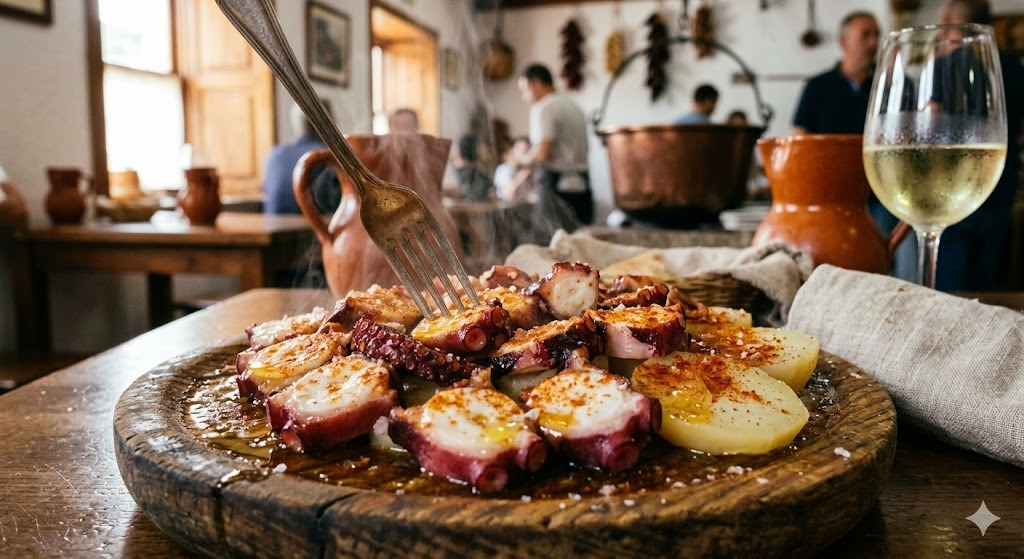
In Galicia, Pulpo a la Gallega is not just a dish; it’s a masterclass in texture. Known locally as Pulpo á Feira (Fair-style octopus), this dish relies on a brutal ritual of “scaring” the meat and a patient rest period. If you’ve ever served rubbery octopus, this guide is your redemption.
What is Pulpo a la Gallega?
While often used interchangeably, there is a subtle distinction:
- Pulpo á Feira: The purist version is just octopus, oil, salt, and paprika.
- Pulpo a la Gallega: Usually includes cachelos (potatoes boiled in the octopus water).
Originating from the inland fairs of Galicia, this dish was traditionally prepared in copper cauldrons. The copper wasn’t just for tradition; it conducted heat with a precision that modern stainless steel struggles to match.
Pulpo vs. Italian Polpo
| Feature | Galician (a la gallega) | Italian (Polpetti/In Umido) |
| Texture | Firm but buttery (al dente) | Soft, often braised until falling apart |
| Serving | Sliced rounds on wood | Whole tentacles or stewed chunks |
| Acid | None (Fat-forward) | Often uses lemon or tomato |
The Ingredients: The Holy Trinity of Galicia
- The Octopus: 1.5kg to 2kg. Pro Tip: Buy it frozen. Freezing breaks down the tough muscle fibers, doing the work of tenderizing for you.
- Extra Virgin Olive Oil: Use a bold, peppery Spanish oil (like Picual).
- Pimentón de la Vera: You need both Dulce (sweet) and a pinch of Picante (spicy).
- Coarse Sea Salt: Maldon or Flor de Sal is essential for the “crunch.”
- Potatoes: Use a waxy variety that holds its shape.
The Technique: Scaring the Octopus
Insert image of the “scaring” process here
1. The Preparation
Thaw your octopus completely in the fridge. Rinse it, but do not salt the water. Salting the cooking water is the fastest way to turn the skin into a rubber band.
2. The “Scare” (El Susto)
Bring a large pot of water to a rolling boil. Hold the octopus by its head. Submerge the tentacles for 5 seconds, then lift. Repeat this three times.
Why? This sudden temperature shock curls the tentacles and, more importantly, “sets” the skin so it doesn’t peel off during the long simmer.
3. The Simmer
Submerge the octopus fully. Lower the heat to a gentle simmer (not a boil). Rule of thumb: 20 minutes per kilo. Test the thickest part of a tentacle with a skewer; it should feel like a perfectly boiled potato.
4. The Rest (The Most Important Step)
Once cooked, turn off the heat and let the octopus sit in its bath for 15–20 minutes. This allows the fibers to relax and reabsorb moisture.
Step-by-Step Plating
- The Base: Boil sliced potatoes in the purple octopus water until tender.
- The Cut: Use scissors. This is the traditional way. Snip the tentacles into 1cm rounds.
- The Wood: Use a flat wooden plate. Wood absorbs excess water while keeping the olive oil pooled around the meat.
- The Seasoning: Potatoes first, octopus on top. Dust heavily with paprika, sprinkle the salt, and finish with a “Spanish waterfall” of olive oil.
Pro Tips & Common Mistakes
- The “Skin Slide”: If the skin falls off, you either skipped the “scare” or boiled the water too vigorously.
- The Copper Penny Trick: Some old-timers drop a copper coin in the pot to mimic the traditional cauldron. Science is skeptical, but tradition is stubborn.
- The Wine: Never drink water with Pulpo. In Galicia, it’s a young, chilled red wine or a crisp Albariño.
| FAQs Can I use pre-cooked octopus? Yes, but you miss the chance to cook your potatoes in the flavored “octopus tea.” Is it spicy? Only as much as your paprika allows. Most pulperías use a 4:1 ratio of sweet to spicy. What is the best way to tenderize fresh octopus? If you aren’t using the freezing method, you must traditionally “beat” the fresh octopus against a hard surface or use a specialized mechanical tenderizer. Can I cook the potatoes and octopus together? You should add the potatoes (cachelos) to the pot during the last 15–20 minutes of the octopus’s simmering time so they finish simultaneously. Why is my octopus meat purple? The deep purple hue is natural pigmentation released from the skin into the cooking water and meat; it is a sign of an authentic, well-simmered dish. |